
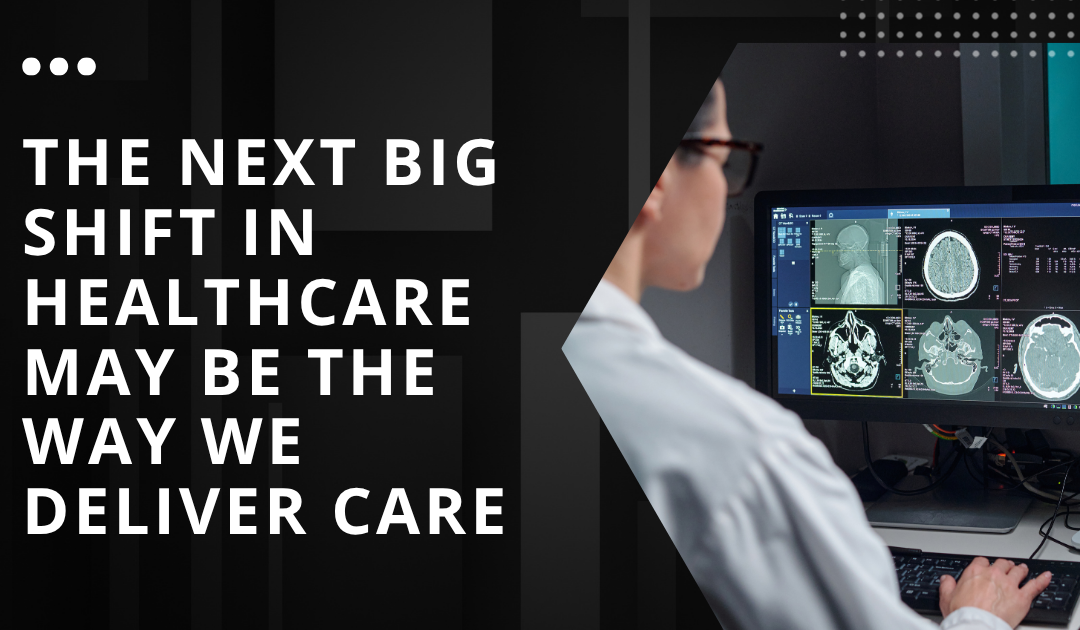
Healthcare innovation is often associated with groundbreaking medicines, advanced medical devices, artificial intelligence, and new diagnostic tools. These developments are transforming what healthcare professionals can do. But another important transformation is taking place behind the scenes: the way care itself is delivered is changing.
Patients today increasingly expect healthcare to be accessible, convenient, personalized, and connected to their everyday lives. As expectations evolve, healthcare organizations are beginning to rethink traditional models that have centered around scheduled appointments, hospital visits, and reactive treatment.
The next major advancement may not simply be a new medical technology. It may be a better way of bringing care to people.
Moving Beyond the Traditional Healthcare Model
For decades, healthcare has largely followed a familiar pattern: a patient experiences a concern, schedules an appointment, visits a healthcare provider, receives an evaluation, and follows a treatment plan.
While this model remains essential, it does not always fit the realities of modern life. Busy schedules, transportation challenges, limited access to specialists, and long waiting periods can create barriers between patients and the care they need.
Healthcare delivery is increasingly moving toward more flexible approaches. Virtual consultations, remote monitoring, digital communication, home-based services, and integrated care models are creating new opportunities for patients to receive support without always needing to visit a traditional healthcare facility.
This does not mean hospitals and clinics are becoming less important. Instead, their role can evolve as healthcare becomes more distributed and connected.
Bringing Care Closer to the Patient
One of the most significant changes in healthcare delivery is the movement of certain services closer to where people live and work.
Remote patient monitoring, for example, can allow healthcare teams to track relevant health information without requiring patients to make frequent in-person visits. Telehealth can make consultations more accessible, particularly for people who live far from medical facilities or have difficulty traveling.
Home-based care can also provide an alternative for certain patients who may benefit from receiving services in a familiar environment.
The broader idea is simple: healthcare does not always have to begin when a patient walks through a hospital door.
By bringing appropriate care into homes, communities, and digital environments, healthcare organizations can create more convenient pathways for patients while potentially reducing unnecessary visits.
Personalization Is Becoming Part of Care Delivery
Another major shift is the growing expectation that healthcare should be designed around the individual.
Patients are not identical. They have different lifestyles, preferences, circumstances, communication needs, and levels of access to healthcare resources.
Modern care models can use information and technology to support more personalized interactions. Instead of relying entirely on standardized approaches, healthcare teams can increasingly consider a patient’s broader circumstances when planning and delivering care.
Personalization can also improve the patient experience. Clear communication, flexible appointment options, accessible information, and coordinated services can make healthcare feel less fragmented.
The goal is not simply to provide more services. It is to provide the right care, in the right setting, at the right time.
Connecting Different Parts of the Healthcare Journey
Healthcare can become frustrating when patients have to repeatedly explain their situation to different providers or navigate disconnected systems.
A more connected delivery model can help bridge these gaps.
When healthcare professionals, specialists, support teams, and patients have better ways to communicate and share relevant information, the overall experience can become more coordinated.
This is particularly important for people managing ongoing or complex healthcare needs. Rather than treating each appointment as an isolated event, connected care can create a more continuous view of the patient’s journey.
Better coordination can also help healthcare professionals focus more effectively on what the patient needs next.
Technology Is an Enabler, Not the Entire Solution
Technology will undoubtedly play an important role in the future of healthcare delivery. Artificial intelligence, digital platforms, remote monitoring tools, electronic records, and other innovations can support more efficient and connected care.
However, technology alone cannot create a better healthcare experience.
A digital appointment is not automatically better simply because it is digital. An automated system is not necessarily helpful if patients cannot understand or navigate it.
Successful innovation requires a balance between technology and human connection. Healthcare professionals still provide something technology cannot fully replace: empathy, judgment, reassurance, and personal understanding.
The best delivery models will use technology to strengthen human-centered care rather than remove the human element from it.
A More Flexible Future for Healthcare
The future of healthcare may be less about choosing between traditional and digital care and more about combining different approaches intelligently.
Some situations will require hospitals and in-person specialists. Others may be handled through virtual consultations, community services, home-based care, or remote monitoring.
This flexibility could give patients more choices while allowing healthcare organizations to use resources more effectively.
Ultimately, the next big shift in healthcare may not be defined by a single invention. It may be defined by a change in mindset: care should be designed around the needs of the patient, rather than expecting every patient to adapt to the healthcare system.
As healthcare continues to evolve, organizations that embrace accessibility, coordination, personalization, and human connection will be better positioned to create meaningful experiences.
The future of healthcare is not only about discovering new ways to treat disease. It is also about discovering better ways to deliver care to the people who need it.